What is a Portmanteau?
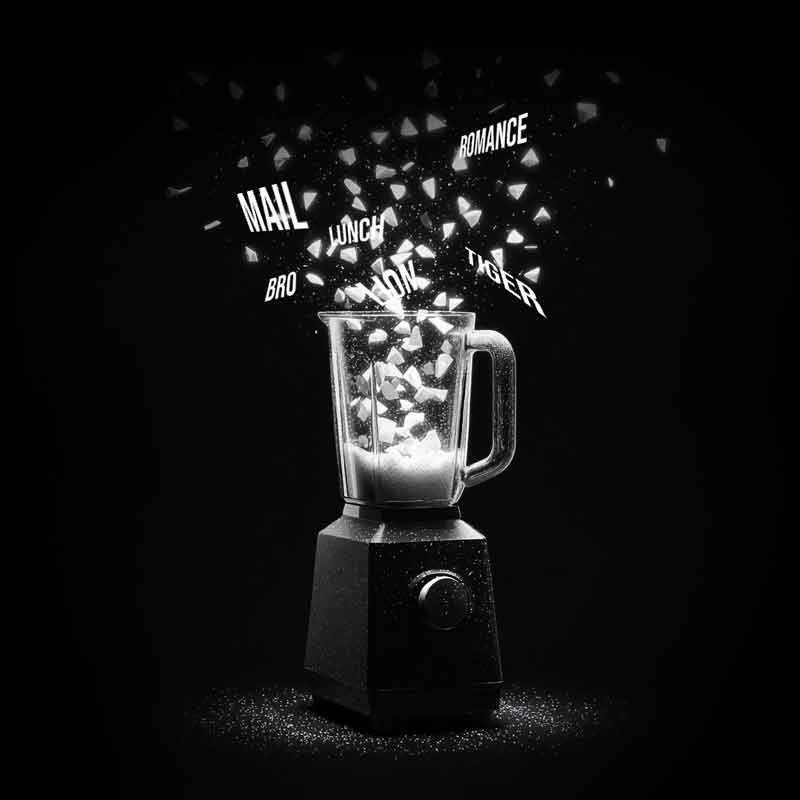
A portmanteau fuses parts of two or more existing words into a single new term, blending their sounds, spellings, and meanings to create something compact and instantly recognizable. The concept gets its name from the French word portemanteau, meaning a two-compartment suitcase, and gained lasting fame through Lewis Carroll’s Through the Looking-Glass in 1871, where Humpty Dumpty described words like “slithy” (a mix of slimy and lithe) as having “two meanings packed up into one word,” much like items neatly stowed in a traveler’s bag.
Everyday examples abound: “smog” combines smoke and fog to describe polluted air, “brunch” merges breakfast and lunch for a late-morning meal, and “motel” joins motor and hotel to evoke roadside lodging for drivers. These blends often feel so natural that people forget they were ever constructed, yet they efficiently capture dual ideas in a single, memorable package.
Rather than simply gluing two complete words together, a portmanteau uses overlapping sounds, clipping segments, or creatively shortening elements to form a seamless whole. This separates it from regular compound words like toothbrush or blackboard, where the original words remain fully intact with no real blending. A portmanteau is also not an acronym (such as NASA or LOL), nor is it an abbreviation like ad for advertisement or flu for influenza.
Examples of Portmanteaus
A portmanteau is a deliberate, playful overlap of words that produces a new word carrying parts of its parents, making something more economical, and fun. For your enjoyment, here’s a categorized lineup of popular, surprising, and obscure portmanteaus and their origins.
1. Classic Everyday Portmanteaus (The OGs)
- Brunch (breakfast + lunch) — A late-morning meal. Coined around 1896 in Hunter’s Weekly as British student slang; now a global weekend staple.
- Smog (smoke + fog) — Polluted air. Introduced by British scientist Dr. Harold Des Voeux in 1905 to describe London’s deadly pea-souper fogs.
- Motel (motor + hotel) — Roadside lodging for drivers. Born in 1925 California amid the car boom; the first “Milestone Mo-Tel” offered parking right at your door.
- Spork (spoon + fork) — Hybrid utensil. Patented in the 1870s but popularized in the 1900s; now standard in school cafeterias and military rations.
- Hangry (hungry + angry) — Irritable from low blood sugar. Added to dictionaries in the 2010s after decades of slang use—science backs the mood-food link.
- Staycation (stay + vacation) — A vacation spent at home or nearby. Rose in popularity during economic downturns as a budget-friendly option.
- Jeggings (jeans + leggings) — Stretchy pants styled like jeans. A comfortable fashion staple since the late 2000s.
- Frenemy (friend + enemy) — A person who is both friend and rival. Popularized in 2000s pop culture.
- Ginormous (giant + enormous) — Extremely large. Slang term that became mainstream in the early 2000s.
- Athleisure (athletic + leisure) — Sporty clothes for exercise and everyday wear. A huge trend since the 2010s.
- Guesstimate (guess + estimate) — A rough calculation based on intuition rather than precise data.
- Chillax (chill + relax) — To calm down and take it easy. Popular 1990s–2000s slang that still lingers.
- Snark (snide + remark) — Sarcastic or biting commentary. Evolved from Lewis Carroll’s imaginary creature into everyday shade.
- Sheeple (sheep + people) — People who blindly follow the crowd without thinking critically.
- Bodacious (bold + audacious) — Outstandingly bold and impressive. Revived in the 1980s from older roots.
- Fauxhawk (faux + mohawk) — A hairstyle mimicking a mohawk without the full shave.
- Brainiac (brain + maniac) — An extremely intelligent person, often with a nerdy connotation.
- Electrocute (electric + execute) — To injure or kill with electric shock. Coined in the late 1800s after early electric chair incidents.
- Infotainment (information + entertainment) — Media that informs while entertaining, like news shows with flashy segments.
- Advertorial (advertisement + editorial) — Paid content designed to look like unbiased journalism.
- Chortle (chuckle + snort) — A gleeful, breathy laugh. Lewis Carroll invented it in Jabberwocky (1871).
- Splatter (splash + spatter) — Wet, messy marks from liquid impact.
- Taxicab (taximeter + cabriolet) — A metered vehicle for hire (shortened to “taxi”).
- Velcro (velvet + crochet) — The hook-and-loop fastener. Invented in the 1940s inspired by burrs.
- Threepeat (three + repeat) — Winning a championship or event three times in a row.
Tech & Digital Portmanteaus
- Blog (web + log) — Online journal. Shortened from “weblog” in 1999; transformed personal publishing forever.
- Podcast (iPod + broadcast) — On-demand audio. Coined in 2004; exploded when Apple added support in iTunes.
- Pixel (picture + element) — Tiny image dot. First used in 1965 for space-probe photos; now we argue about “pixel density” on phones.
- Modem (modulator + demodulator) — Internet connector. 1950s tech term that let computers talk over phone lines.
- Listicle (list + article) — Numbered online story. 2000s buzzword for clickbait we all secretly love reading.
- Phablet (phone + tablet) — Oversized smartphone. Coined around 2010 for devices like the Galaxy Note.
- Webinar (web + seminar) — Internet-based seminar or workshop. Essential for remote learning and business.
- Animatronics (animation + electronics) — Lifelike robotic figures (Disney classic from the 1960s).
- Vlog (video + log) — Video blog or journal. YouTube phenomenon since the mid-2000s.
- Malware (malicious + software) — Harmful computer code. Key term in cybersecurity since the 1990s.
- Phishing (phoney/phone + fishing) — Fraudulent attempts to obtain sensitive info. Originated in 1990s AOL scams.
- Email (electronic + mail) — Digital message delivery system. Emerged on ARPANET in the 1970s and became ubiquitous by the mid-1990s.
- Cyberspace (cybernetic + space) — The notional environment of digital networks. Popularized by William Gibson in his 1984 novel Neuromancer.
- Emoticon (emotion + icon) — Text-based facial expressions. First popularized in 1982 on early computer bulletin boards.
- Netiquette (net + etiquette) — Rules and norms for polite online behavior. Widely taught in the early internet Usenet days.
- Wikipedia (wiki + encyclopedia) — Collaborative online reference. Launched in 2001 and quickly became the world’s largest knowledge repository.
- Clickbait (click + bait) — Sensationalized headlines designed to lure readers. Rose with social media and content farms in the 2010s.
- Freemium (free + premium) — Business model combining free access with paid features. Transformed mobile apps and SaaS starting in the late 2000s.
- Ransomware (ransom + software) — Malicious software demanding payment to unlock data. Major cybersecurity threat since major outbreaks in the 2010s.
- Hacktivist (hacker + activist) — Someone who uses hacking for political or social causes.
- Fintech (finance + technology) — Technology-driven financial services. Explosive industry that disrupted banking from the early 2010s onward.
4. Brand Name Portmanteaus
- Microsoft (microcomputer + software) — Bill Gates’ empire, founded 1975. Simple, descriptive, and now worth trillions.
- Netflix (internet + flicks) — Streaming giant. Launched as DVD-by-mail in 1997; the name predicted the future.
- Pinterest (pin + interest) — Visual bookmarking site (2010). “Pin” from bulletin boards + “interest” = addictive scrolling.
- Verizon (veritas “truth” + horizon) — Telecom merger in 2000. Latin + English for “truth to the horizon”—catchy and aspirational.
- Panera (pan “bread” + era “time/age”) — Bakery chain. Latin roots mean “bread age”; founder wanted it to feel timeless.
- Velcro (velvet + crochet) — Hook-and-loop fastener. Invented in the 1940s after burr inspiration.
- Groupon (group + coupon) — Deal-of-the-day site. Launched in 2008 and revolutionized local marketing.
- Amtrak (America + track) — U.S. passenger railroad. Established in 1971.
- Instagram (instant + telegram) — Photo and video sharing app. Name evokes quick image transmission.
- Comcast (communication + broadcast) — Major cable and media company formed from mergers.
- Airbnb (airbed + breakfast) — Home-sharing disruptor. Began in 2008 with air mattresses and breakfast.
- Spotify (spot + identify) — Music streaming service. Founded in 2006 in Sweden.
- Skype (sky + peer) — Internet calling app. Launched in 2003; made video calls mainstream.
- FedEx (federal + express) — Global shipping leader. Rebranded from Federal Express in 1973.
- Band-Aid (band + aid) — Adhesive bandage icon. Invented in 1920 by Johnson & Johnson.
- Adidas (Adi + Dassler) — Global sportswear giant. Named after founder Adolf “Adi” Dassler in 1949.
- Costco (cost + company) — Wholesale retail powerhouse. Known for bulk buying and membership model.
- Aldi (Albrecht + discount) — Budget supermarket chain. Founded by the Albrecht brothers in Germany.
- Mattel (Matt + Elliot) — Toy industry leader. Named after founders Matt Matson and Elliot Handler.
2. Culinary Hybrids
- Cronut (croissant + donut) — Flaky, fried pastry hybrid. Dominique Ansel Bakery launched it in NYC in 2013; lines stretched around the block for months.
- Turducken (turkey + duck + chicken) — Three birds, one roast. Chef Paul Prudhomme popularized the deboned-stuffed monstrosity in the 1980s; it’s a Thanksgiving legend.
- Frappuccino (frappé + cappuccino) — Blended iced coffee. Starbucks trademarked it in 1995—now a billion-dollar menu category.
- Tofurkey (tofu + turkey) — Vegetarian roast. Invented in the 1980s for plant-based holidays; perfect for mocking meat-eaters at the table.
- Froyo (frozen + yogurt) — Tangy frozen yogurt dessert. Boomed in the 2000s as a healthier ice cream alternative.
- Pluot (plum + apricot) — Sweet hybrid fruit. Developed by California breeders in the late 20th century.
- Craisins (cranberry + raisins) — Sweetened dried cranberries. Marketed by Ocean Spray as a snack.
- Cruffin (croissant + muffin) — Buttery, flaky pastry in muffin form. Another bakery hybrid hit.
5. Celebrity Couple Mashups
- Brangelina (Brad + Angelina) — Pitt + Jolie. Media frenzy peaked 2005–2016; still used nostalgically.
- Bennifer (Ben + Jennifer) — Affleck + Lopez. The original 2002–2004 (and 2021 redux) that launched the trend.
- Kimye (Kim + Kanye) — Kardashian + West. Dominated headlines 2012–2021.
- TomKat (Tom + Katie) — Cruise + Holmes (2006–2012). Short-lived but iconic.
- Robsten (Robert + Kristen) — Pattinson and Stewart of Twilight fame (2000s-2010s).
- Jelena (Justin + Selena) — Bieber and Gomez’s on-off relationship.
- Speidi (Spencer + Heidi) — Pratt and Montag from reality TV’s The Hills.
- Tayvis (Taylor + Travis) — Swift and Kelce, the 2020s sports-entertainment power couple.
6. Regions and Place Portmanteaus
- Bollywood (Bombay + Hollywood) — Hindi film industry in Mumbai. Coined in the 1970s; now produces more movies annually than Hollywood.
- Eurasia (Europe + Asia) — The combined supercontinent of Europe and Asia. A classic geographic portmanteau used in both physical and geopolitical contexts.
- Tanzania (Tanganyika + Zanzibar) — East African nation. Formed in 1964 when the two territories united post-independence.
- Chunnel (Channel + Tunnel) — England-France rail link. Opened 1994 after decades of planning.
- Calexico (California + Mexico) — Real California border town (and band name). Founded 1908; literally straddles cultures.
- Texarkana (Texas + Arkansas) — Twin cities on the Texas-Arkansas state line.
- Mexicali (Mexico + California) — Major Mexican border city paired with Calexico.
- Delmar (Delaware + Maryland) — Community split between Delaware and Maryland.
- Michiana (Michigan + Indiana) — Regional name for the area around the MI-IN border.
7. Entertainment and Pop Culture Hits
- Pokémon (pocket + monsters) — “Pocket Monsters” in Japanese. 1996 game franchise that still rules.
- Sitcom (situation + comedy) — TV format staple since the 1950s.
- Biopic (biography + picture) — Biographical film. Hollywood shorthand since the 1940s.
- Mockumentary (mock + documentary) — Fake docs like This Is Spinal Tap (1984). A satirical or comedic film or TV show styled as a documentary, using fake footage, interviews, and “real-life” events to parody the documentary format while telling a fictional story.
- Cosplay (costume + roleplay) — Dressing up as fictional characters. Huge at conventions (Like Comicon) since the 1990s.
- Romcom (romance + comedy) — Romantic comedy movie or show genre shorthand.
- Dramedy (drama + comedy) — Blend of dramatic and comedic storytelling.
- Edutainment (education + entertainment) — Media that teaches while amusing, like many documentaries or shows.
- Infotainment (information + entertainment) — News-style programming mixed with entertainment. Popularized by cable networks in the 1980s and 90s.
- Infomercial (information + commercial) — Extended product advertisement formatted like a TV show. Dominated late-night TV starting in the 1980s.
- Docudrama (documentary + drama) — Dramatized retelling of real historical events. A staple of TV movies since the 1970s.
- Rockumentary (rock + documentary) — Music documentaries focused on rock bands and artists. Iconic examples include Don’t Look Back and This Is Spinal Tap.
- Muppet (marionette + puppet) — Jim Henson’s lovable creations that blend string puppets with hand puppets. Now a cultural icon.
- Webisode (web + episode) — Short-form online episodes of TV shows. Pioneered in the early 2000s as broadband took off.
- Fanfic (fan + fiction) — Stories written by fans using characters from existing books, shows, or movies. A massive creative outlet online.
- Chickflick (chick + flick) — Lighthearted films targeted toward female audiences. A major Hollywood category since the 1990s.
- Esports (electronic + sports) — Competitive video gaming turned professional sport. Now a multi-billion dollar global industry.
- Machinima (machine + cinema) — Films created using real-time video game graphics and engines.
- Telethon (television + marathon) — Long-form televised charity fundraising event. Famous for stars like Jerry Lewis.
- Prequel (pre + sequel) — Story set before the events of the original film or series.
- Reboot (re + boot) — Fresh restart of an existing franchise with new actors or direction.
- Fandom (fan + kingdom) — Dedicated community of enthusiasts for a particular show, book, or celebrity.
- Stan (stalker + fan) — Extremely devoted (and sometimes obsessive) supporter. Popularized by Eminem’s 2000 song.
- Cineplex (cinema + complex) — Multi-screen movie theater complex. Transformed how we experience films since the 1960s.
- Docusoap (documentary + soap) — Reality TV that follows real people like a soap opera. Popularized by shows like The Real World.
8. Political and Social Portmanteaus
- Brexit (Britain + exit) — 2016 UK EU referendum. Coined in 2012; changed global politics.
- Obamacare (Obama + healthcare) — Affordable Care Act nickname (2010).
- Gerrymander (Elbridge Gerry + salamander) — District-rigging. From 1812 Massachusetts; the original map looked like a lizard.
- Reaganomics (Reagan + economics) — 1980s trickle-down policy term.
- Stagflation (stagnation + inflation) — Economic period of high inflation and unemployment, notably 1970s.
- Hacktivism (hack + activism) — Using computer hacking for political or social protest.
- Clintonomics (Clinton + economics) — Economic policies associated with the Clinton administration.
- Astroturfing (AstroTurf + grassroots) — Fake grassroots political movements or campaigns.
9. Animal Hybrids
- Liger (lion + tiger) — Male lion + female tiger hybrid (real animal, popularized in Napoleon Dynamite).
- Labradoodle (Labrador + poodle) — Hypoallergenic dog breed, bred in Australia 1980s.
- Chortle (chuckle + snort) — Lewis Carroll invented it for Jabberwocky (1871)—still perfect for smug laughter.
- Galumph (gallop + triumph) — Another Carroll coinage: clumsy, happy bounding.
- Puggle (pug + beagle) — Popular designer dog crossbreed.
- Cockapoo (cocker spaniel + poodle) — Hypoallergenic hybrid pup from the 1960s onward.
- Beefalo (beef + buffalo) — Cattle-bison hybrid raised for lean meat.
- Slithy (slimy + lithe) — Lewis Carroll’s Jabberwocky term for “smooth and active.”
- Tigon (tiger + lion) — The reciprocal hybrid of a liger (male tiger + female lion). Rarer and typically smaller than ligers.
- Wholphin (whale + dolphin) — Extremely rare hybrid of a false killer whale and a bottlenose dolphin. Only a handful confirmed in captivity.
- Leopon (leopard + lion) — Leopard-lion hybrid known for its striking spotted mane. First bred in India in the early 20th century.
- Cama (camel + llama) — Camel-llama hybrid created through artificial insemination in Dubai in 1998. Produces fine wool and has no hump.
- Grolar Bear (grizzly + polar) — Also called a “pizzly.” A hybrid offspring between a grizzly bear and a polar bear. The term emerged in popular media and scientific discussions after the first confirmed wild hybrid was documented in 2006 in the Canadian Arctic
- Zorse (zebra + horse) — Striking striped equine hybrid. Often used for riding and shows unusual zebra-like behavior.
- Goldendoodle (golden retriever + poodle) — Friendly, curly-coated designer dog famous for its intelligence and allergy-friendly coat.
- Maltipoo (Maltese + poodle) — Tiny, affectionate lap dog that combines the Maltese’s charm with the poodle’s low-shedding fur.
- Pomsky (Pomeranian + husky) — Adorable miniature husky lookalike that packs big personality into a small, fluffy package.
- Vorpal (voracious + mysterious origins) — Carroll’s adjective for the deadly “vorpal sword” in Jabberwocky—still evokes lethal sharpness.
- Bandersnatch (bander + snatch) — Fearsome, fast-moving creature from Carroll’s Jabberwocky and Through the Looking-Glass.
10. Modern Slang & Surprises
- Bromance (bro + romance) — Platonic dude love (2000s).
- Glamping (glamour + camping) — Luxury tents (2007+).
- Phubbing (phone + snubbing) — Ignoring people for your screen.
- Affluenza (affluence + influenza) — Rich-kid entitlement syndrome (coined 2000s).
- Shopaholic (shop + alcoholic) — Someone addicted to shopping.
- Bootylicious (booty + delicious) — Curvaceously attractive; popularized by Destiny’s Child.
- Cankles (calf + ankles) — When calves appear to merge with ankles.
- Anticipointment (anticipation + disappointment) — The letdown when something hyped falls short.
- Bromance (bro + romance) — Platonic dude love (2000s).
- Glamping (glamour + camping) — Luxury tents (2007+).
- Phubbing (phone + snubbing) — Ignoring people for your screen.
- Affluenza (affluence + influenza) — Rich-kid entitlement syndrome (coined 2000s).
- Mansplaining (man + explaining) — Condescending male explanation of a concept or idea (often to women).
- Doomscrolling (doom + scrolling) — Obsessively consuming bad news online.
- Hangxiety (hangover + anxiety) — Used to describe post-drinking dread (popular since early 2020s).
- Snark (snide + remark) — Sarcastic or biting commentary (originally a Lewis Carroll creature, now everyday shade).
- Frenemy (friend + enemy) — A rival disguised as a friend.
- Chillax (chill + relax) — To calm down (1990s slang that still hits).
- Guesstimate (guess + estimate) — A rough approximation based on intuition.
- Sheeple (sheep + people) — People who blindly follow the crowd.
- Bodacious (bold + audacious) — Outstandingly bold and attractive (1980s revival of a 19th-century blend).
- Crunk (crazy + drunk) — Wildly energetic party state (1990s hip-hop classic).
- Twerk (twist + jerk) — The iconic hip-shaking dance move.
- Snark (snide + remark) — Originally an imaginary creature in Carroll’s The Hunting of the Snark; now means sarcastic or critical commentary.
- Infotainment (information + entertainment) — News or media that’s both informative and fun.
- Advertorial (advertisement + editorial) — Paid content that looks like real journalism.
- Bankster (banker + gangster) — Corrupt or predatory banker (post-2008 crisis term).
- Spanglish (Spanish + English) — Hybrid language mixing both.
- Metaverse (meta + universe) — Virtual shared digital world.
- Infodemic (information + epidemic) — Overwhelming spread of (often false) information (coined during the pandemic).
- Truthiness (truth + iness) — Something that feels true but isn’t (Stephen Colbert coinage, 2005).
Portmanteaus sneak into our vocab so seamlessly we forget they’re engineered. Want to craft your own portmanteus from any word you can imagine? Use the Word.Studio Word Blender tool.
Go have fun, you wild wordster (word + master).